Abbey House History


The Reeves-Porches
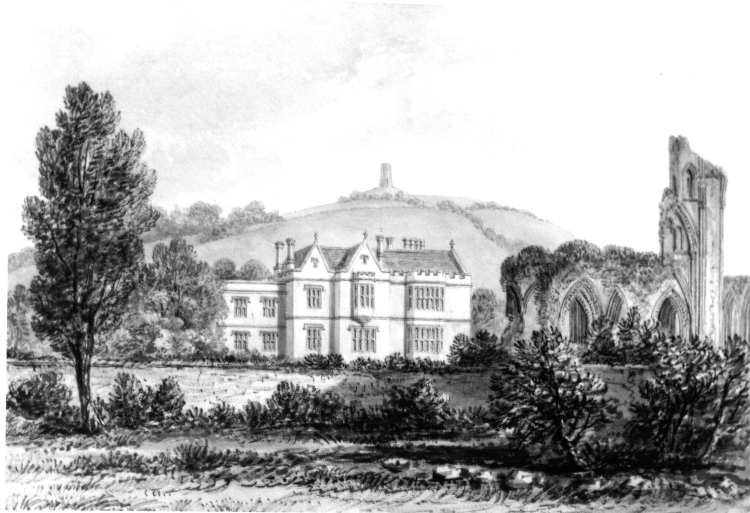
When the abbey estate was purchased in 1825 by successful banker John Fry Reeves, he decided to build a gentleman’s residence in a position that gave a view directly down the axis of the ruined church.
Reeves was married to Maria Porch, of the wealthy Porch family who lived at Edgarley. He did not live here himself but rather his son Thomas, in his early 20s and just married, moved into the house after it was built.
Reeves commissioned eminent artist and architect John Buckler to design the house, which was built in a Tudor-Gothic style. Many of the original features of this Grade II* building remain and can be appreciated.
After a period of financial difficulties, the house and abbey grounds were sold and Reeves left Glastonbury.
(Image, right: Watercolour of Abbey House by Buckler, 1830. Original in the Piggott Collection, Courtauld Institute)
The Austins
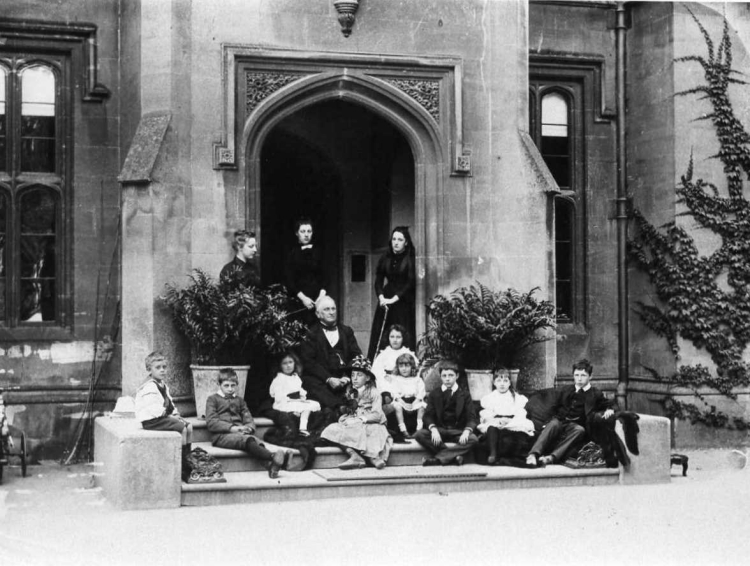
Within a few years the abbey changed hands a second time, this time being sold to James Austin in 1861. Hailing from a farming family in Baltonsborough, James had made his fortune in Australia, after following his uncle there who had started many enterprises from which James and his siblings benefitted.
It was around this time that the house was extended beyond its original floorplan, probably because of the large family and army of servants that James had. James spent the rest of his life at Abbey House and was mayor of Glastonbury on five occasions.
After James’ death in 1896, the estate passed to his son Stanley Austin. Stanley parted with the abbey at auction in 1907 when it was purchased on behalf of the Diocese of Bath & Wells by businessman Ernest Jardine.
(Image, left: James Austin with his grandchildren at Abbey House, c.1890)
The Retreat House
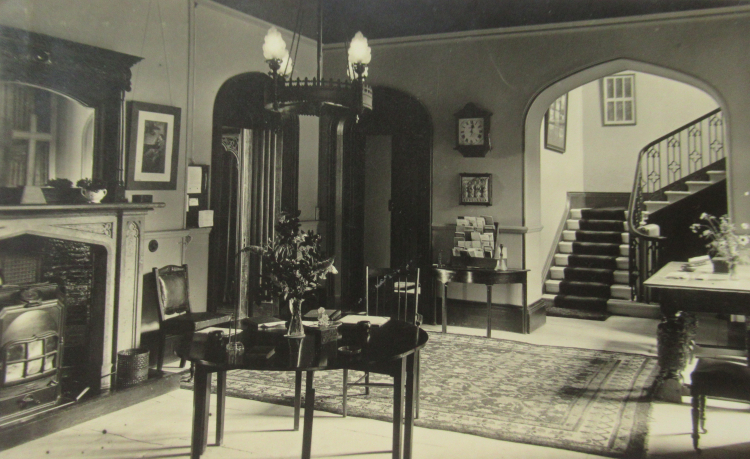
After renting the house out for some years, the Diocese decided to convert Abbey House into a retreat house. This involved dividing the larger upstairs rooms into smaller bedrooms to accommodate more occupants. The retreat house ran from 1930 to 2017 and was under the management of a number of Lady Wardens in its early years, followed by an order of nuns in the 1970s-80s. Besides clergy and church groups, a variety of faith groups and individuals came to enjoy the peace and serenity offered within this corner of the abbey estate.
In 2017, the retreat house business closed, and Glastonbury Abbey, established as an independent charity since the 1960s, as owners took back management of the house. Income from events and workshops hosted at the house goes towards the upkeep of the entire abbey site.
(Image, right: Abbey House reception hall, c.1950s)